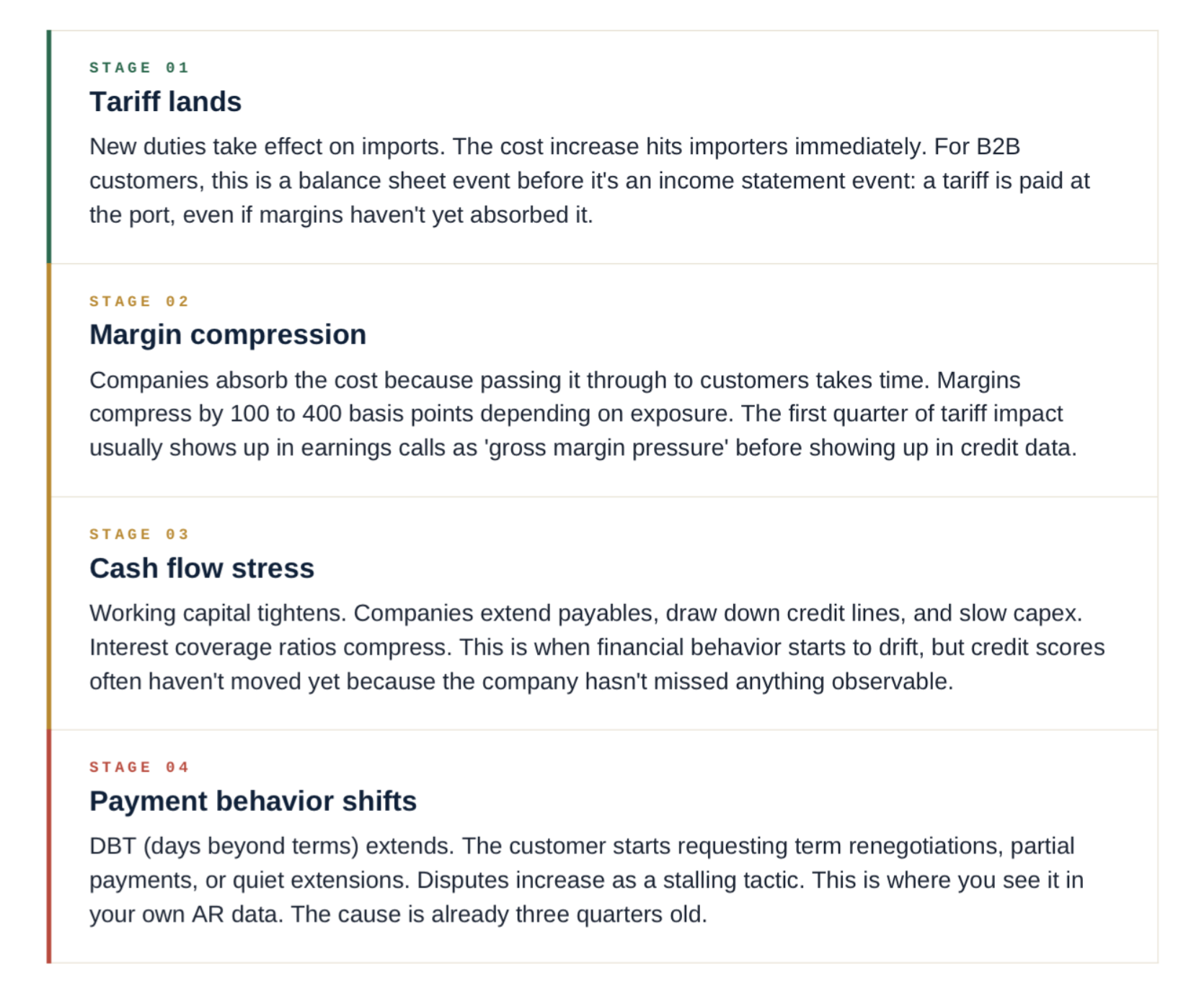
• Tariffs hit B2B payment behavior through a four-stage cascade: input cost shock, margin compression, cash flow stress, then payment behavior shifts.
• The lag between a tariff and visible payment behavior change is typically 60 to 180 days. Some industries feel it within a quarter, others take longer.
• Direct importers and downstream manufacturers with cross-border supply chains are most exposed. Domestic service businesses are insulated, but their customers may not be.
• Credit bureau scores are lagging indicators here. By the time PAYDEX or Intelliscore reflects tariff stress, the underlying damage has been compounding for months.
Direct Answer
US tariffs affect B2B payment behavior indirectly, through a chain of effects on the customer's underlying financial position. The tariff is an input cost shock. Margins compress as companies absorb the cost. Cash flow tightens. By the time it reaches the customer's payment behavior with you, the tariff has worked through their entire operating cycle.
The chain is reliable, but the speed varies. Direct importers feel margin compression within a quarter. Downstream manufacturers see it through their suppliers passing costs along, usually a quarter or two later. Even seemingly insulated domestic businesses can be affected if their customers face tariff exposure.
Most B2B credit teams react too late because they wait for the lagging indicators (credit score changes, public filings) instead of watching the leading ones (input cost news, margin guidance in earnings calls, working capital changes on 10-Q filings).
The Causal Chain
Four stages, in order. Each takes 30 to 90 days to express. By stage 4, the credit decision has often already been made.
Common Mistakes
• Treating tariffs as a one-time event. They're not. Once imposed, tariffs change the structural cost basis of every transaction for as long as they exist. The compounding effect on cash flow continues each quarter.
• Assuming your domestic-only customer is safe. Maybe. But what about their customers? A US-based industrial supplier selling into auto manufacturers has indirect tariff exposure even though they import nothing.
• Watching the wrong data. Credit bureau scores update slowly. By the time PAYDEX moves on a tariff-stressed customer, you're 6 to 9 months late. Watch leading indicators: earnings calls, gross margin guidance, payables days.
• Reacting to the tariff headline instead of customer specifics. Not every tariff matters equally to your customer. The right question isn't "are tariffs in the news" but "how exposed is this specific customer's cost structure".
• Tightening terms across the board. Reactive policy changes alienate customers who weren't actually at risk. Segment first. Tighten on Group A, monitor Group B, leave Group C alone.
Frequently Asked Questions
How quickly do tariffs affect customer payment behavior?
The full chain takes 60 to 180 days from tariff implementation to visible payment behavior change. Some direct importers see it within 30 days because they're forced to fund the duty at the port. Most B2B customers see effects 90 to 120 days out as margin compression flows through their working capital.
Which industries are most exposed to tariff-driven credit risk?
Direct importers in consumer goods, electronics, apparel, and auto parts feel it first. Downstream manufacturers (autos, machinery, appliances, building products) feel it second through their supply chains. Domestic services are mostly insulated unless their own customers carry tariff exposure.
Should I tighten credit terms when tariffs are announced?
Not as a blanket policy. Tightening on customers who don't have tariff exposure damages relationships unnecessarily. Tighten selectively on customers in Group A industries with clear direct exposure. For Group B, increase monitoring frequency. For Group C, leave terms alone.
How can I tell if a specific customer is being affected by tariffs?
Read their most recent earnings call (or 10-Q for public companies) and search for 'tariff,' 'duties,' 'input costs,' or 'gross margin pressure.' For private customers, watch for changes in payment timing (DBT trend), partial payments, and dispute frequency. LinkedIn headcount data picks up downstream stress as well.
Are tariffs already affecting business bankruptcy rates?
Indirectly, yes. PwC's restructuring outlook cites tariff and trade disruption among the factors driving Chapter 11 filings to a 10-year high in 2025. The Q3 2025 spike in business bankruptcies to 24,039 filings (the highest quarterly total since 2016) overlaps with the 2024-2025 tariff actions, though attribution is mixed with other macro factors.
What's the difference between direct and downstream tariff exposure?
Direct exposure means the company itself pays the tariff (importer of record). Downstream exposure means the company buys from a supplier who pays the tariff and passes some or all of the cost along. Direct exposure hits faster. Downstream exposure is harder to track because the link is one or two steps removed.
Do tariffs affect different sizes of customer differently?
Yes. Larger customers usually have more pricing power to pass costs through, deeper credit lines to absorb working capital stress, and more sophisticated treasury operations. Small and mid-sized customers in Groups A and B feel it harder and faster. Adjust monitoring intensity by both industry and size.
Summary
• Tariffs hit payment behavior through a four-stage cascade: tariff lands, margins compress, cash flow tightens, payment behavior shifts. Typical lag: 60 to 180 days.
• Direct importers feel it first. Downstream manufacturers feel it through their supply chains. Domestic services are mostly insulated.
• Watch leading indicators (earnings call language, payables days, working capital changes), not lagging ones (credit scores, public filings).